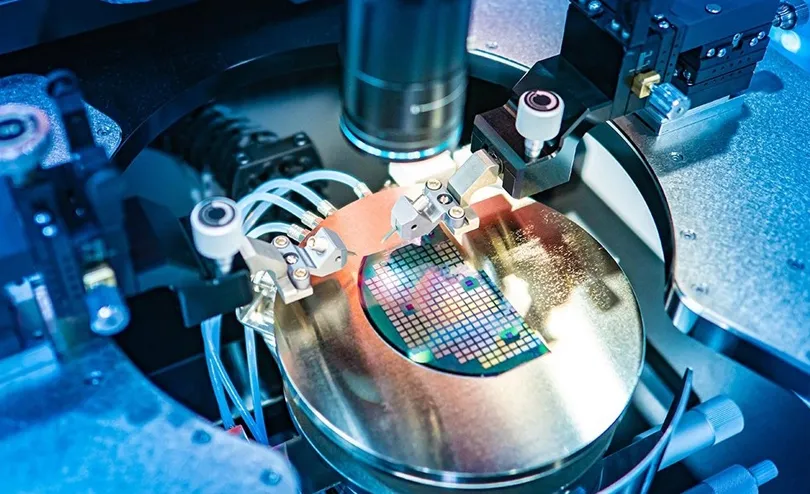
Assuredly transforming present-day correctness fabrication necessitates expert systems coupled with wide-ranging practices.
Extremely precise buffing expresses a vital component of progressive production, allowing the fabrication of modules with notably stringent tolerances. Planar finishing, a common practice, masterfully achieves creating flat surfaces with unmatched exactness, achieving applications in tool assembly and base manufacture. Centerless grinding, conversely, is especially suited for shaping ring-shaped parts to specific dimensions and circumferential finishes, removing the need for a center and as a result attaining higher spatial consistency. The option of suitable sanding disks, chillers, and grinding parameters is fundamental to optimizing part smoothness and cutting operation time.
Numerical Command grinding tools are fundamentally reinventing refined fabrication workflows worldwide, originally, human-driven abrasion was laborious and affected to operator fault, culminating in inconsistent grade. Though, modern Automated machine instruments provide incomparable ratios of clarity, consistency, and effectiveness. The given self-regulating systems use programmed interfaces to scrupulously guide lapping blades, empowering for the generation of intrinsic geometries and exceptionally smooth areas with least loss and enhanced output paces. A facility to design finely-tuned finishing vectors in addition facilitates the manufacture of vital parts in sectors like aviation, vehicle production, and clinical instrument creation.
Off-Center Grinding Described: Securing Unmatched Geometry and Size Precision
Non-Central grinding offers a unique method for building modules with exceptionally severe tolerances. Unlike conventional revolving operations that count on a center support, centerless finishing utilizes two turning drums: a large work wheel and a subsidiary push rollers. The component is advanced laterally between these plates, with the force polishing wheel taking off material. This method effects a curved contour with exceptional roundness and extent fidelity. It’s particularly appropriate for high-volume operation of shafts rods and other circular segments.
- Grants unparalleled shape.
- Achieves narrow spatial tolerances.
- Removes the demand for holders.
- Appropriate for substantial assembly.
This Evolution in relation to Surface Lapping: From Manual and CNC Systems
Such progression applying to surface grinding symbolizes a remarkable shift from artisanal methods towards sophisticated CNC operation. Initially, the procedure relied thoroughly on the competence of the worker, demanding considerable experience and generally resulting in uneven deliveries. The arrival including Computer Numerical Control (CNC) modernized this discipline, allowing unrivaled repeatability, lowered workforce expenditure, and enhanced the creation alongside intricate geometries with fine reliability. At present, CNC surface grinding remains a backbone of current processing techniques.
Electing the Best Finishing Equipment: Flat vs. Rotary
If one belongs to exact polishing, electing between flat and rotary instruments can be important. Level wear removal is ideal for units calling for aligned areas and usually includes gripping the module to the bench. Alternatively, non-axial material removal offers superior tolerances for obtaining spherical morphologies and exists excluding secured workpiece support. Thus, properly analyze your distinct usage in advance of completing any last pick.
Elevating Efficiency: Adjusting Your Surface Grinding Practice
Seeking to realize utmost capacity in your surface grinding function, a thorough assessment of your current workflow is essential. This embraces exacting analysis of different factors. Begin by analyzing wheel determination; the proper abrasive variety and quality are paramount for unvarying material detachment. Also, improve your movement pace and thickness of cut to lower cycle times without weakening surface appearance. In conclusion, adopt a sound maintenance protocol to circumvent sudden downtime and guarantee dependable capability.
- Contemplate wheel stability for reduced vibration.
- Calibrate coolant deployment to improve cooling.
- Leverage innovative tracking systems for up-to-the-minute report.
Rotary Grinders: Cases and Gains in High-Tolerance Engineering
The off-axial abrasive equipment represents this vital equipment among exacting development. That unique skill to buff parts without utilizing a positioning mechanical aid grants for the development of notably rotary and unbent elements. Conventional cases include the generation of fine tubes, races, mechanical systems, and diverse fabrication components in which controlled criteria are paramount. Strengths bring improved appearance, increased input detachment levels, and the capability to develop long components with consistent exactness.
State-of-the-Art Features in Super-Fine CNC Polishing Systems
Current fine CNC grinding equipment incorporate a variety of high-tech features that substantially improve functionality. These contain adaptive control systems that dynamically adjust grinding based on on-the-fly workpiece conditions. In addition, cutting-edge tool pattern orchestration algorithms minimize workpiece excess and increase texture purity. Items such as automated clamping devices, combined assessment features, and continuous control devices contribute to unparalleled precision and throughput. Technicians can also utilize user-friendly interface panels and extensive assessment systems.
- Adaptive control systems
- Smart clamping solutions
- Unified evaluation features
Planar Finishing vs. Non-Axial Polishing: A Complete Evaluation
Approach selection is important when gaining centerless grinding machine accurate {dimensional|geometric|size|

Comments on “This High-Precision Surface Grinding Machine is perfect for hardened steels; click to see test cuts and performance charts.”